











I recently came across an article that caught my attention and shared a brief synopsis on LinkedIn. I have included a link to the original publication at the end of this piece for those who wish to explore the data in more depth.
Cells do not simply wear out as we age. Instead, many are pushed into a stressed and inflammatory state known as senescence. Senescent cells stop dividing and repairing tissue, yet remain metabolically active. Over time, their presence accelerates aging throughout the body.
Emerging research on stem cell-derived extracellular vesicles suggests it may be possible to delay or even prevent this process by strengthening the cell’s own defense systems, particularly those that protect against oxidative stress. Extracellular vesicles are also commonly referred to as exosomes, a term many people are already familiar with.
What Are Extracellular Vesicles
Extracellular vesicles are microscopic, membrane-bound particles released by cells. They carry proteins, lipids, and genetic instructions that allow cells to communicate with one another. Stem cells naturally release two main types of these vesicles. Larger microvesicles bud directly from the cell surface, while smaller exosomes form inside the cell and are later released into the surrounding environment.
These vesicles function much like biological delivery systems. They transfer information that can influence how recipient cells behave, repair themselves, or respond to stress. When vesicles originate from young, highly regenerative stem cells, the signals they carry appear to support healthier and more resilient cellular function.
How Cells Age and Become Senescent
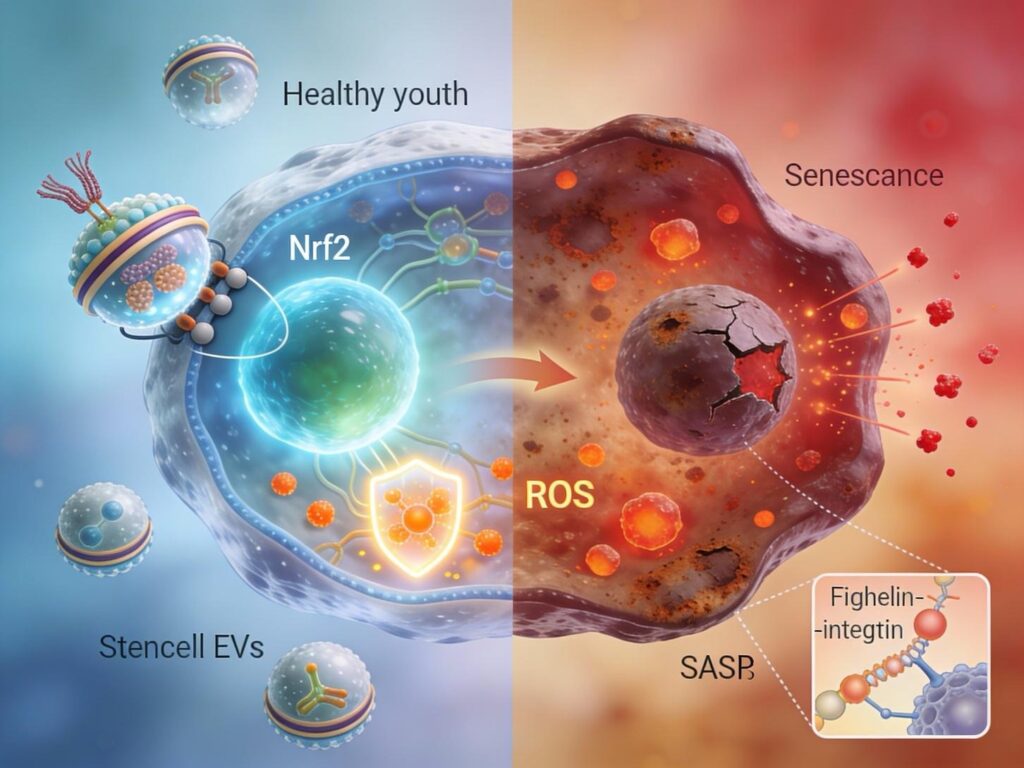
As cells divide and encounter environmental stressors, they accumulate reactive oxygen species, often referred to as ROS. These highly reactive molecules act like microscopic rust, damaging proteins, DNA, and cellular structures. When this damage reaches a critical threshold, cells often enter senescence.
Senescent cells are not silent. They release a mix of inflammatory and tissue-disrupting molecules known as the senescence-associated secretory phenotype. This inflammatory environment damages neighboring cells, promotes fibrosis, and is increasingly linked to age-related conditions affecting the brain, cardiovascular system, joints, and skin.
The New Study on Extracellular Vesicles and Cellular Aging
A recent study published in the Journal of Biological Chemistry examined extracellular vesicles released by embryonic stem cells and their effects on normal mouse fibroblasts and brain support cells known as astrocytes.
As expected, untreated cells that were repeatedly cultured eventually stopped dividing and showed classic signs of senescence. In contrast, cells treated with stem cell-derived extracellular vesicles continued to divide and maintained a more youthful cellular profile.
Importantly, these vesicles did not change the identity of the cells. Fibroblasts remained fibroblasts, and astrocytes remained astrocytes. What changed was their ability to handle stress. Treated cells showed lower levels of oxidative damage, healthier growth patterns, and reduced expression of senescence markers.
How Extracellular Vesicles Strengthen Cellular Defenses
The researchers traced these protective effects to a specific interaction at the cell surface. Stem cell-derived vesicles carry a structural protein called fibronectin on their outer membrane. Fibronectin binds to integrin receptors on recipient cells, initiating a cascade of internal signals.
This signaling pathway activates molecules such as FAK and AKT, which ultimately suppress the enzyme GSK3β. Inhibiting GSK3β stabilizes Nrf2, a master regulator of the cell’s antioxidant defense system. Once activated, Nrf2 increases the production of enzymes that neutralize reactive oxygen species before they can cause lasting damage.
In practical terms, extracellular vesicles help reinforce the cell’s internal protective systems, allowing it to continue functioning and dividing without prematurely entering senescence.
Beyond Embryonic Stem Cells
While this particular study used embryonic stem cell-derived vesicles, similar extracellular vesicles can be obtained from ethically acceptable sources, including induced pluripotent stem cells and mesenchymal stem cells. In our clinic, we do not use embryonic products.
Extracellular vesicles derived from induced pluripotent stem cells have demonstrated strong anti-senescence and regenerative effects in multiple studies. Some evidence suggests these cells produce significantly higher quantities of vesicles than mesenchymal stem cells, which may improve scalability for clinical use.
Mesenchymal stem cell-derived vesicles have consistently been shown to reduce oxidative stress, modulate inflammation, and support tissue repair across a wide range of organ systems. While the signaling pathways may differ slightly, the protective outcomes are often similar.
These sources avoid ethical concerns and are already being explored for applications in aesthetic medicine, neurology, cardiovascular health, and musculoskeletal conditions.
What This Means for Regenerative and Anti-Aging Medicine
This research supports a growing shift in regenerative medicine. Future therapies may rely less on transplanting whole cells and more on delivering precisely engineered extracellular vesicles that carry targeted biological signals.
Such approaches could offer many benefits. Vesicle-based therapies may reduce the risks associated with uncontrolled cell growth or improper cell differentiation while still delivering powerful regenerative and protective effects.
Clinically, these concepts are especially relevant for tissues where cumulative oxidative stress and cellular senescence drive functional decline. These include the brain, heart, blood vessels, joints, skin, and blood-forming systems.
Stem cell-derived extracellular vesicles present a compelling vision for the future. Rather than simply repairing damage after it occurs, these therapies aim to preserve cellular health by reinforcing the body’s own resilience mechanisms. As the science and manufacturing of extracellular vesicles continue to advance, these small but powerful messengers may become central tools in the next generation of longevity and regenerative medicine.
HERE I referenced and shared on LinkedIn.
– Dr. P