












In regenerative medicine, we often talk about “signals.” Your body is constantly listening to signals from your diet, your environment, and your level of physical activity. These signals tell your cells whether it is time to grow, repair, or conserve energy.
One of the most important of these decision-makers is a pathway known as mTOR, which stands for mechanistic Target of Rapamycin. You can think of mTOR as the general contractor overseeing your body’s entire construction site. Based on the signals it receives, this pathway makes a crucial decision.
If nutrients are abundant, mTOR says:
“We have enough supplies. Start building.”
If nutrients are low, mTOR shifts gears:
“Pause building and start repairing.”
Understanding this switch gives us the tools to support a strong, resilient body while also promoting long-term health and longevity.
The Builder Mode: Why mTOR Is Essential
Whenever you lift weights or eat protein, you activate mTOR. This puts the body into an anabolic, or growth, state. In this mode, your cells focus on building and strengthening tissues. This is essential for:
• Maintaining muscle and preventing age-related muscle loss
• Supporting immune function by producing new white blood cells
• Strengthening brain connections that support memory and learning
• Healing after illness, surgery, or injury
Without mTOR activation, we would lose muscle, recover more slowly, and gradually become frail.
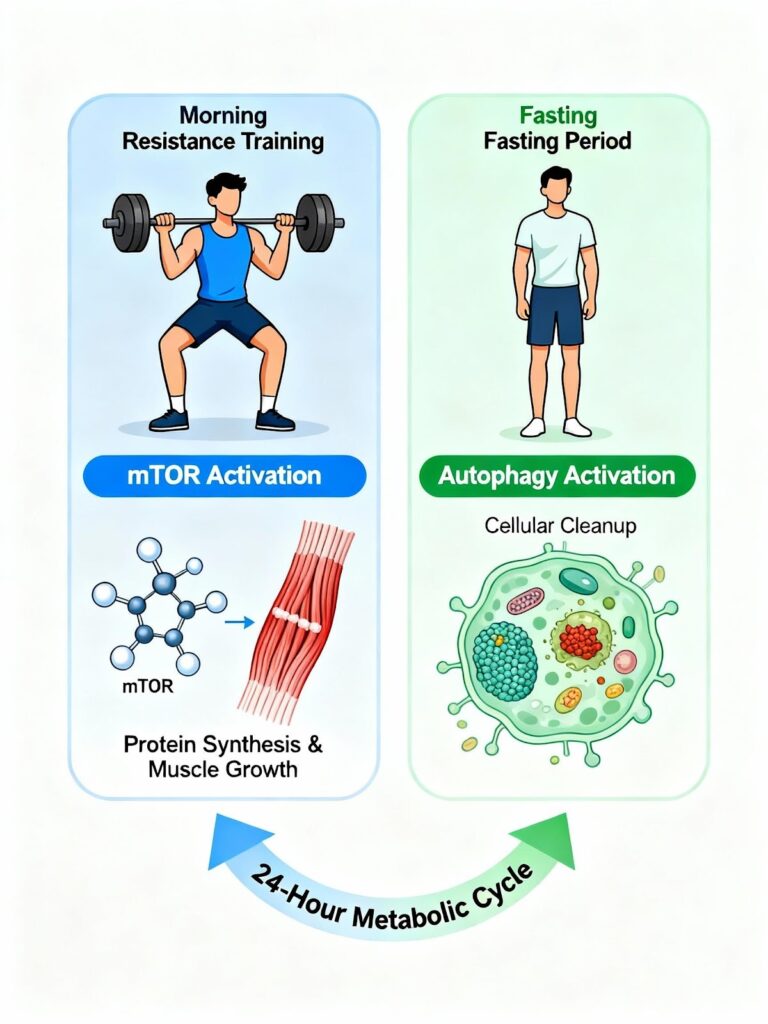
The Cleaner Mode: Why Turning Off mTOR Slows Aging
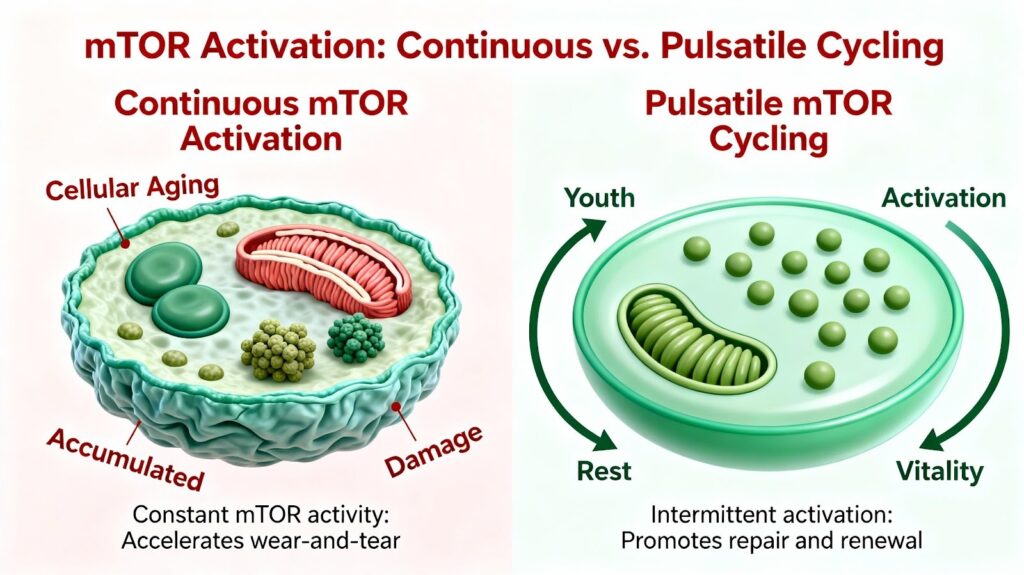
Here is the paradox. The body cannot build and repair at the same time. When mTOR stays constantly switched on, the “construction site” gets cluttered. Damaged proteins accumulate, dysfunctional mitochondria linger, and cellular debris builds up.
When we temporarily turn mTOR off, the body shifts into renovation mode. This activates a powerful process called autophagy, which translates to “self cleaning.” It is the body’s recycling system. During autophagy, cells identify damaged or dysfunctional components, break them down, and reuse the materials to create healthy new structures.
Autophagy reduces inflammation, clears out senescent or “zombie” cells, and restores the efficiency of your mitochondria. This deep cleaning is one of the fundamental mechanisms behind healthy aging.
The Danger of an Always On Lifestyle
In modern life, mTOR rarely gets a break. Constant snacking, high calorie diets, and sedentary habits keep mTOR stuck on “build” mode. This prevents the body from entering the essential repair state. Over years and decades, this creates a buildup of cellular damage that contributes to aging, metabolic disease, and even cancer.
The goal is not to permanently shut down mTOR. The goal is to cycle it. We want periods of strong activation to maintain muscle and vitality, followed by periods of autophagy to keep the body clean and youthful.
How to Control the Switch
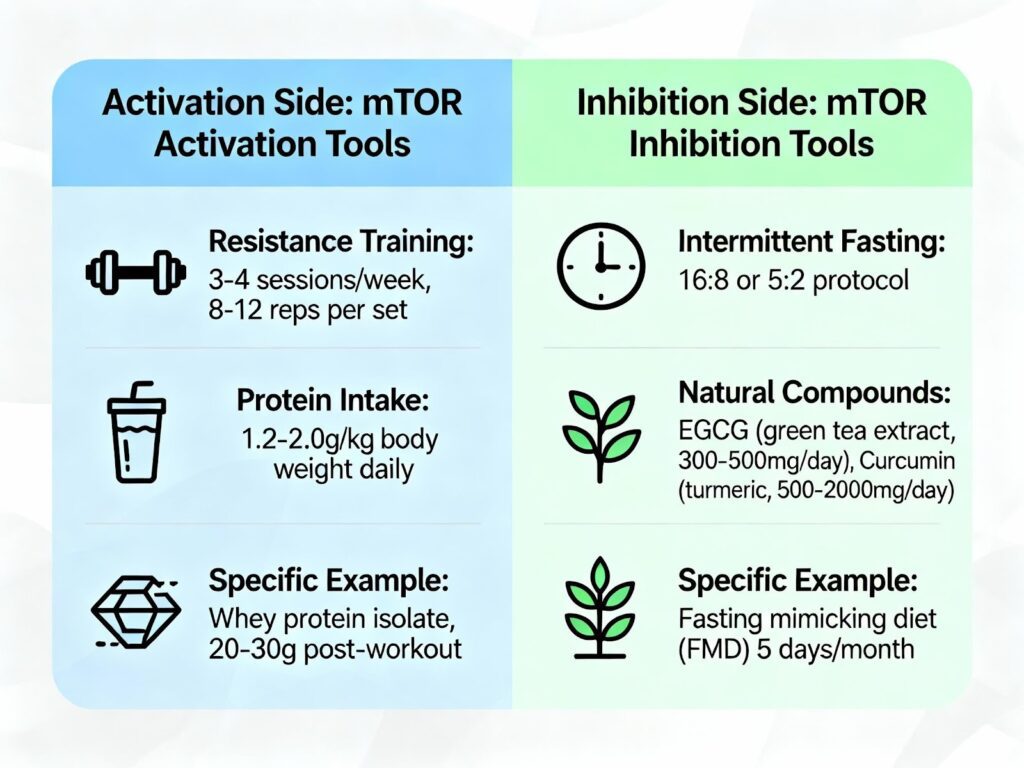
1. Stimulate mTOR during the Feast Phase
When you want to build strength or recover from injury, you should activate mTOR.
How to do it:
• Resistance training
• Adequate protein intake, especially leucine rich foods
• Carbohydrates paired with protein to enhance the growth signal
2. Inhibit mTOR during the Famine Phase
To trigger autophagy and support long-term cellular health, mTOR must periodically quiet down.
How to do it:
• Intermittent fasting
• Caloric restriction
• Natural compounds such as berberine, resveratrol, and curcumin
These mild mTOR inhibitors help simulate the benefits of fasting.
Advanced Medicine: Rapamycin and Rapalogs
For some patients, lifestyle changes alone are not enough. This is where precision medicine comes in. Rapamycin is an FDA approved medication originally discovered in soil on Easter Island. It remains the most powerful pharmaceutical tool we have for inhibiting mTOR.
When used properly and intermittently, usually once per week, Rapamycin can push the body into a deep repair state. This mimics the cellular effects of prolonged fasting without the need for extreme caloric restriction. In research settings, Rapamycin has shown the ability to clear senescent cells, improve immune function, and support healthy aging.
The Takeaway for Your Health
You are the manager of your body’s construction site. Your goal is not to keep mTOR permanently switched on or permanently switched off. Your goal is metabolic flexibility.
• Train hard and eat protein to turn mTOR on and stay strong.
• Fast, recover, and use targeted supplements to turn mTOR off and support longevity.
By mastering this switch, we do more than add years to life. We add life to those years.
– Dr. P